NON-WOVEN
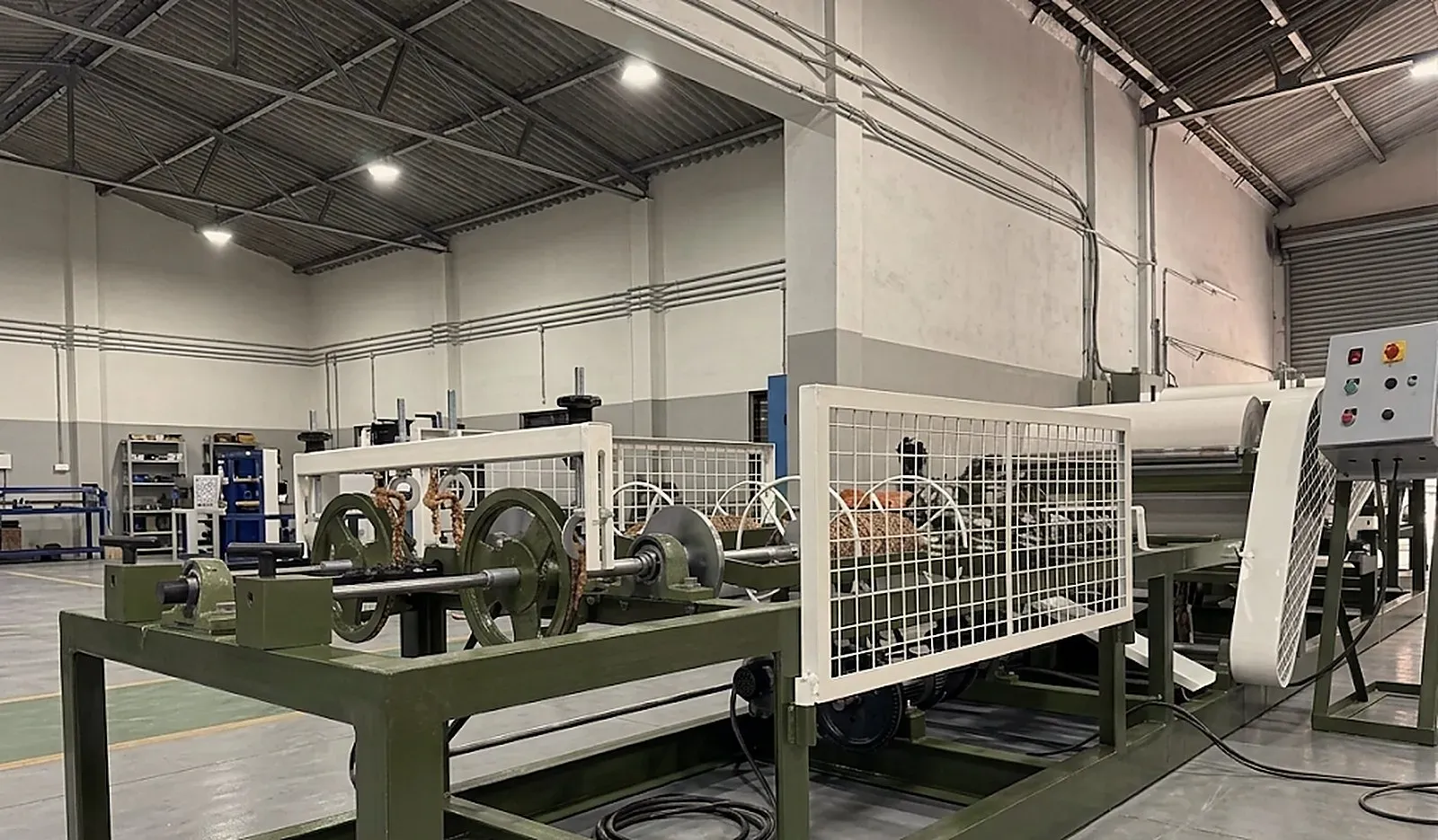
Non-woven needle felt
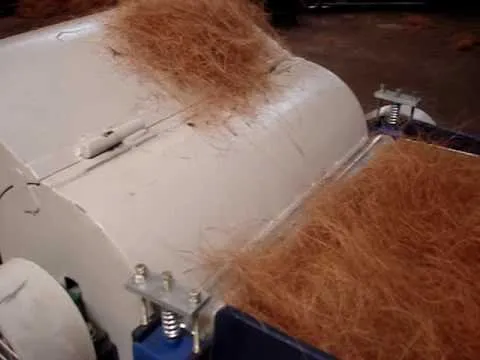
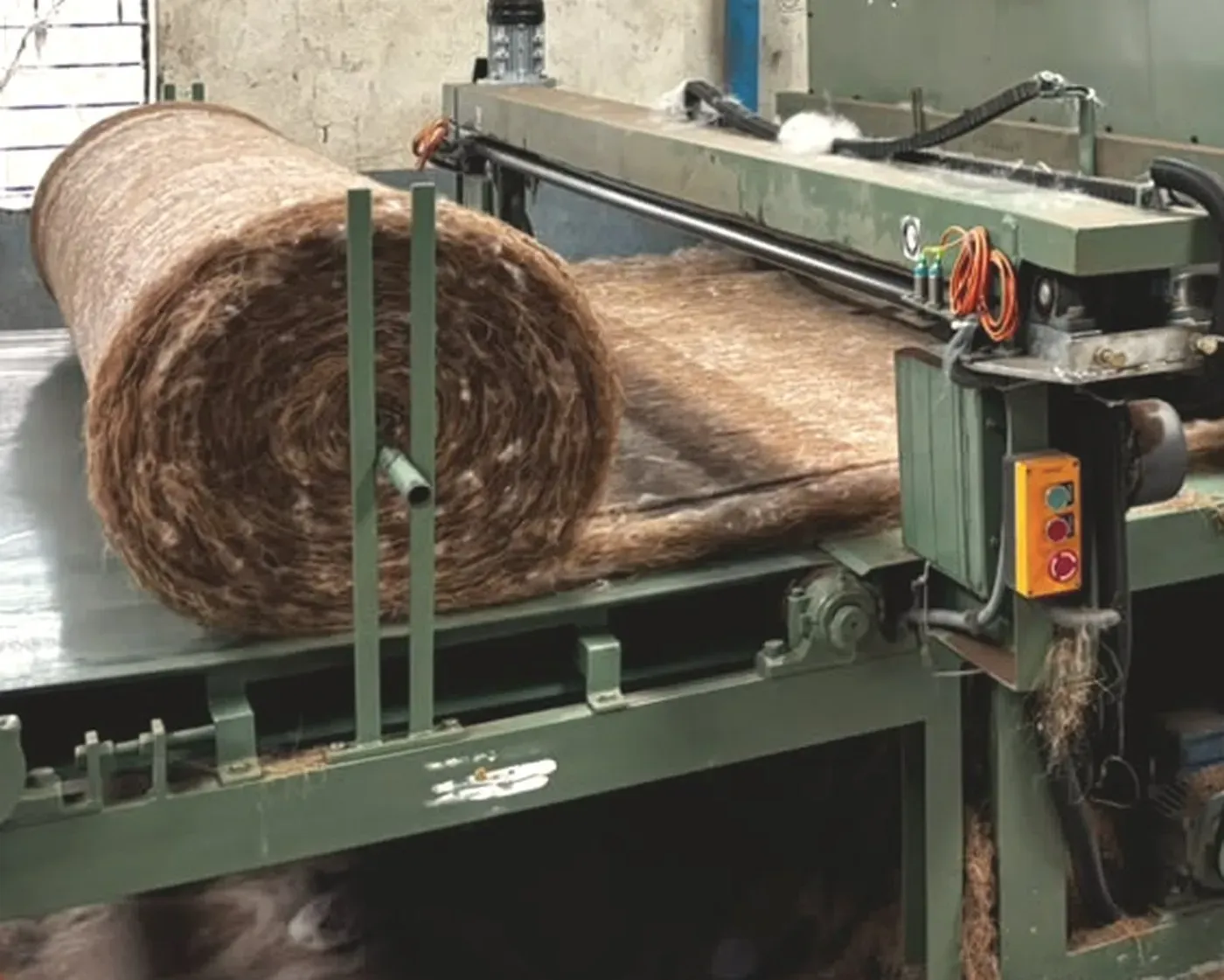
Loose coir fibre opened, needled into a web and finished as coir felt sheet or continuous roll, at the thickness the application needs.
Coir machinery manufacturer · Peenya, Bengaluru · Since 1991
2M Engineers designs and builds coir processing machinery: non-woven needle felt lines, 2 ply and 3 ply coir yarn spinning machines, and fibre extraction and sheet cutting machines, all made to order at our own works since 1991.
The proposition
Most fibre machinery ties a factory to a single output. Ours does not. Adjust the fibre, the thickness and the finishing, and the same coir needle felt line feeds a different market with a different margin.
That matters most where the fibre is already local and cheap. A mill running coir felt for mattresses in the morning can run erosion control fabric for a highway contract in the afternoon, on the same machine, with the same operators.
Move between mattress material, acoustic panels, geotextiles and horticulture products without re-tooling for each market.
Convert locally available raw fibre into a finished, saleable material rather than selling it on unprocessed.
Geotextile work follows the road and canal contracts; mattress and panel orders do not. Running both off one line holds utilisation through a lean season.
What the machines make
NON-WOVEN
Loose coir fibre opened, needled into a web and finished as coir felt sheet or continuous roll, at the thickness the application needs.
TWINE & ROPE
The spinning machines lay coir yarn into twine and rope. Two ply is the working twine, used by the horticulture, packaging and handling trades. Three ply is laid heavier for rope. Both come off the same fibre, on machines built in mini, single conveyor, double conveyor and fully automatic versions.
The material
The needle felt line runs a set number of finished coir felt thicknesses. Thin grades go out to horticulture and soil work, heavy grades into bedding and sound absorption, and everything leaves the line cut into sheets or wound into continuous rolls.
5 mm finished thickness
Step through the grades.
Applications
These four markets all buy the same coir felt, just at different weights, and manufacturers keep finding more.
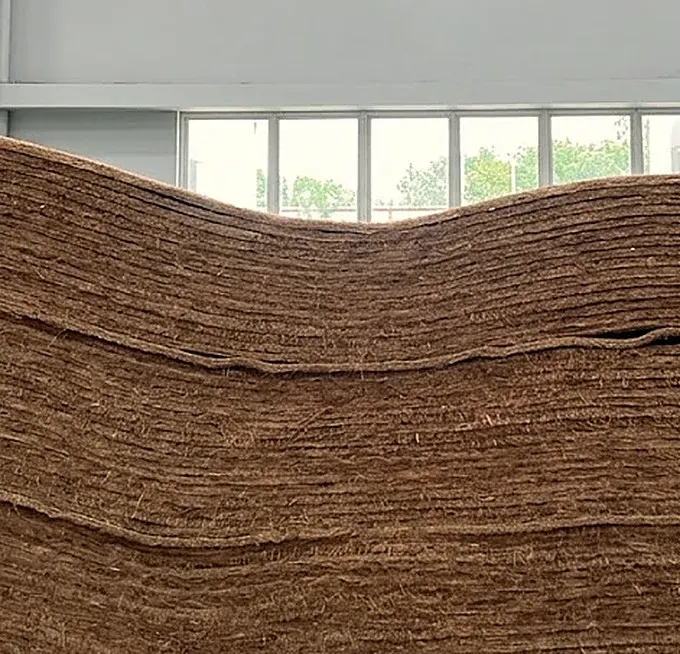
Bedding manufacture
Coir felt as a firm core or as a topper layer under foam and fabric, supplied cut to size or on the roll.
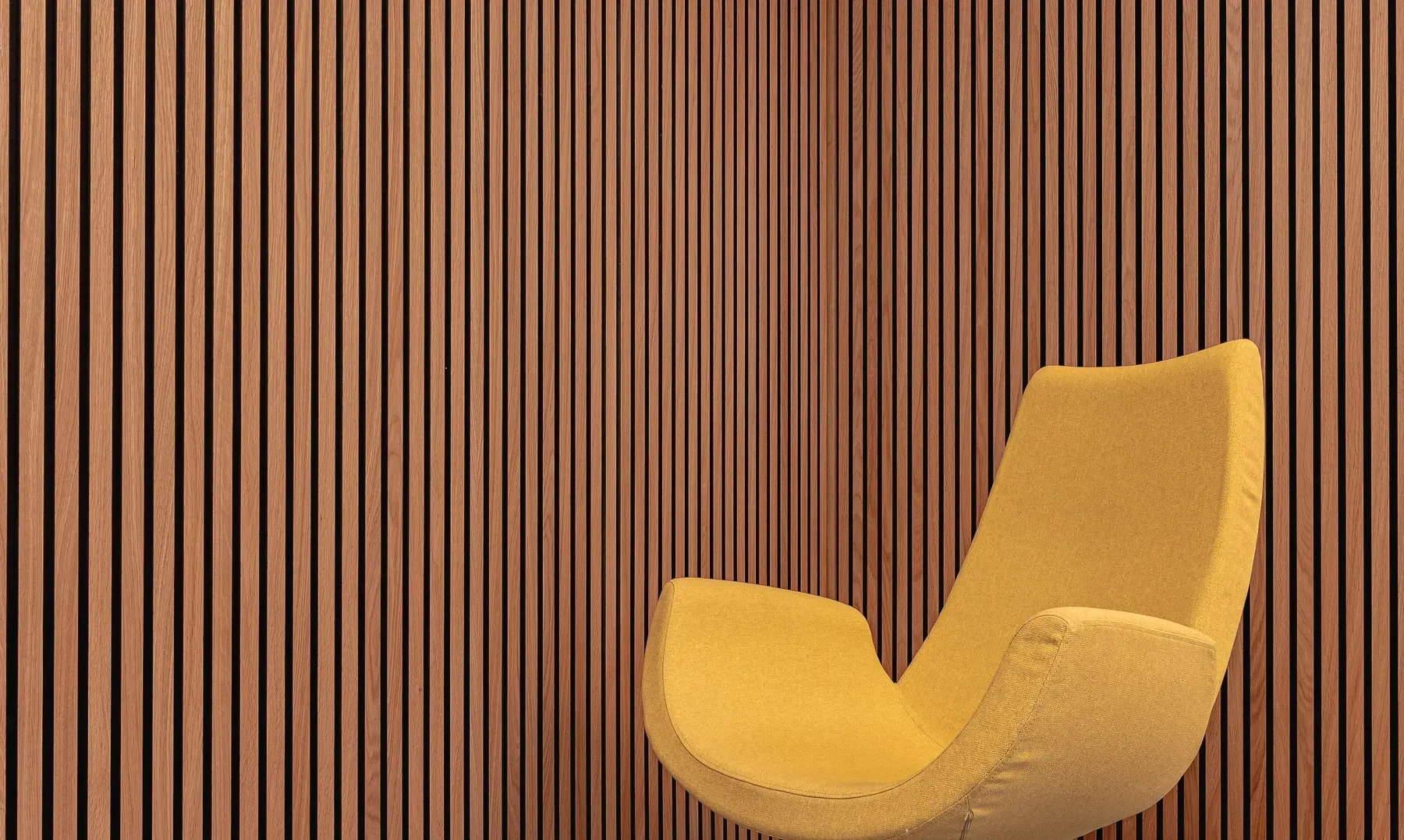
Construction & interiors
Open fibre structure that absorbs sound instead of reflecting it back, which makes the material a direct substitute for synthetic acoustic media.
Civil works & landscaping
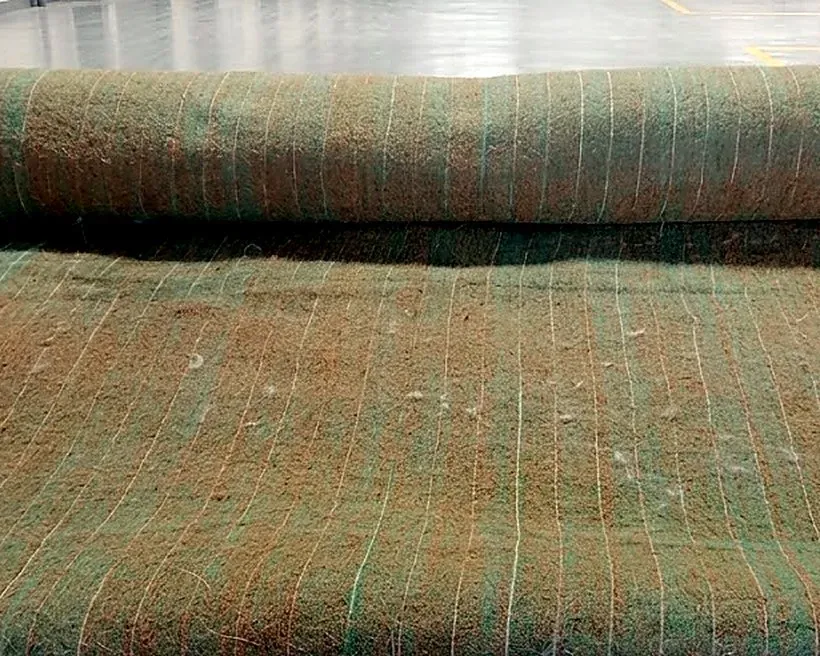
Coir geotextile blankets that hold slope soil while planting takes root, where a material that biodegrades in place is an advantage rather than a compromise.
Garden & nursery trade
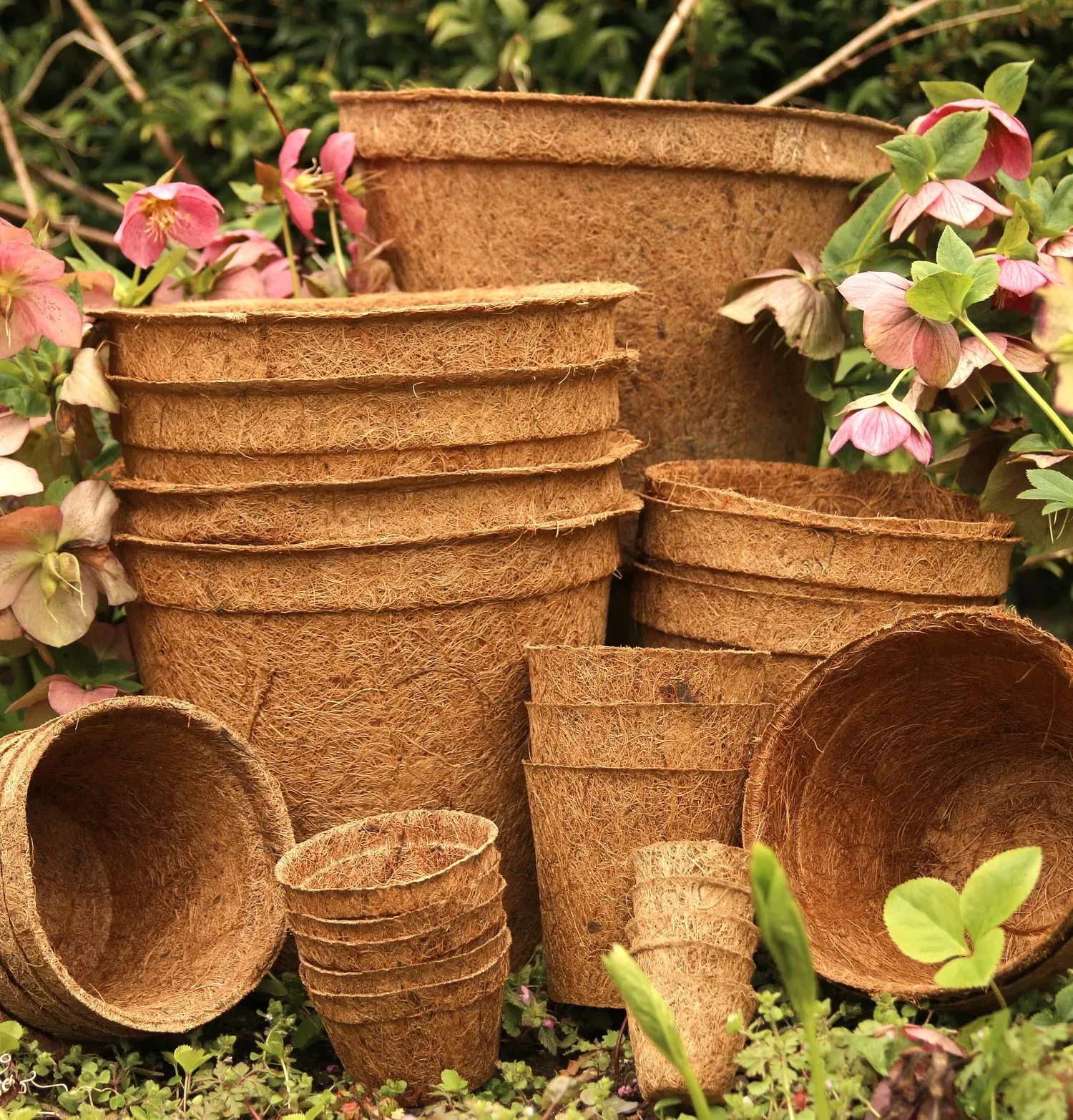
Moulded and pressed coir pots and planters for nurseries, retail plants and landscaping, formed from the same fibre sheet.
The range
Tell us your fibre and your output and we will point you at the right one.
On film
Our automatic double head 2 ply spinning machine, fed straight from the fibre tray with no slivering stage. Two spools twist coir yarn at once, on one motor with one operator, and the same machine runs date and sisal fibre.
On the floor
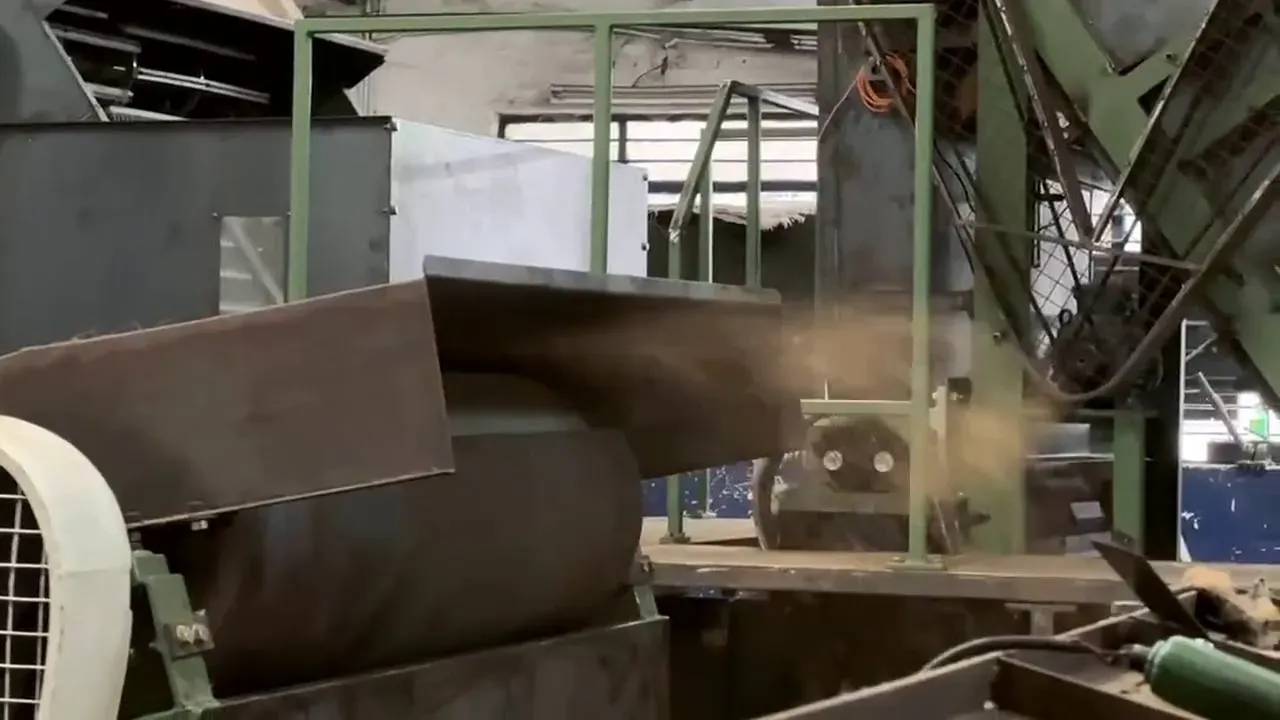
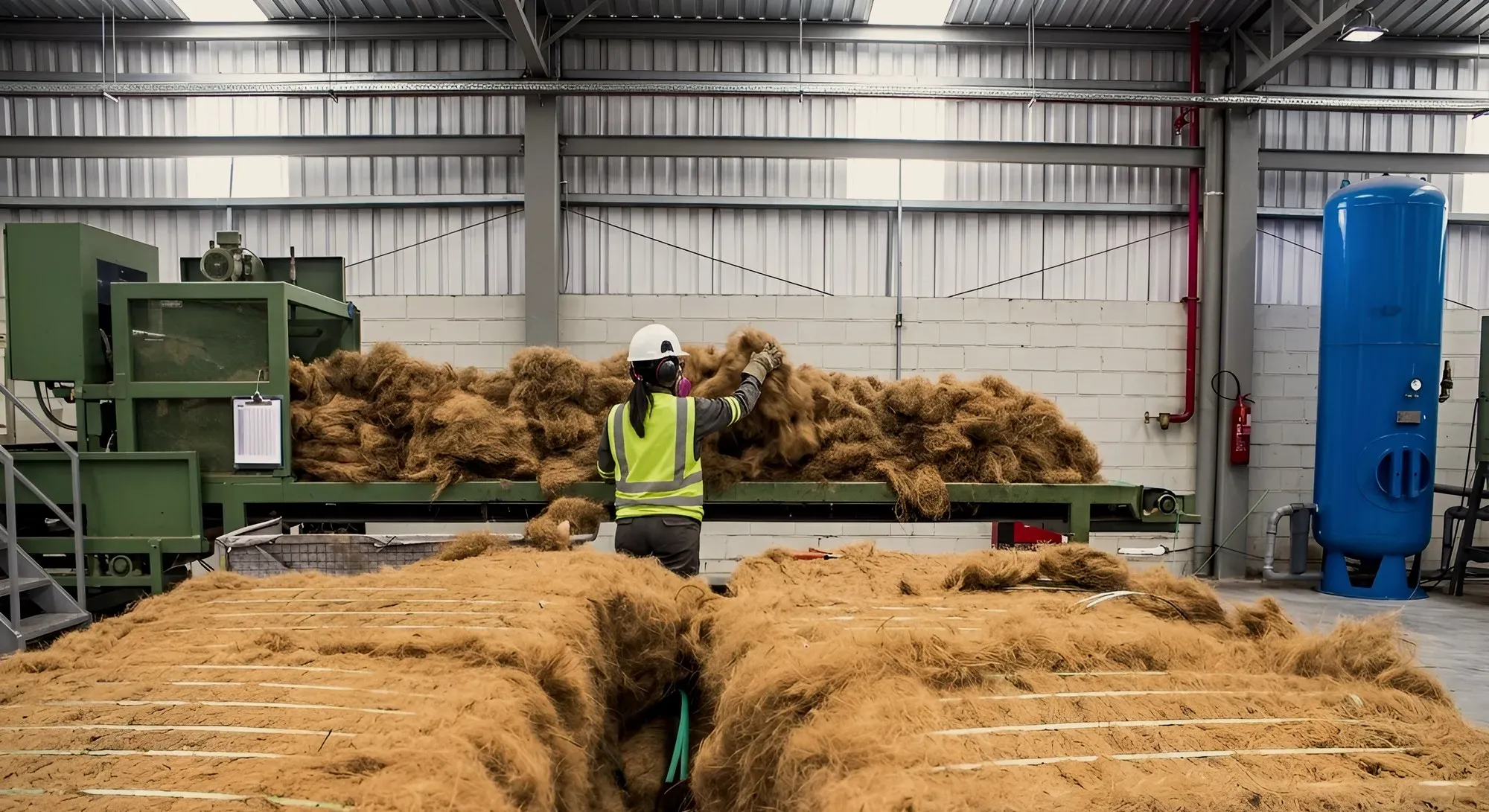
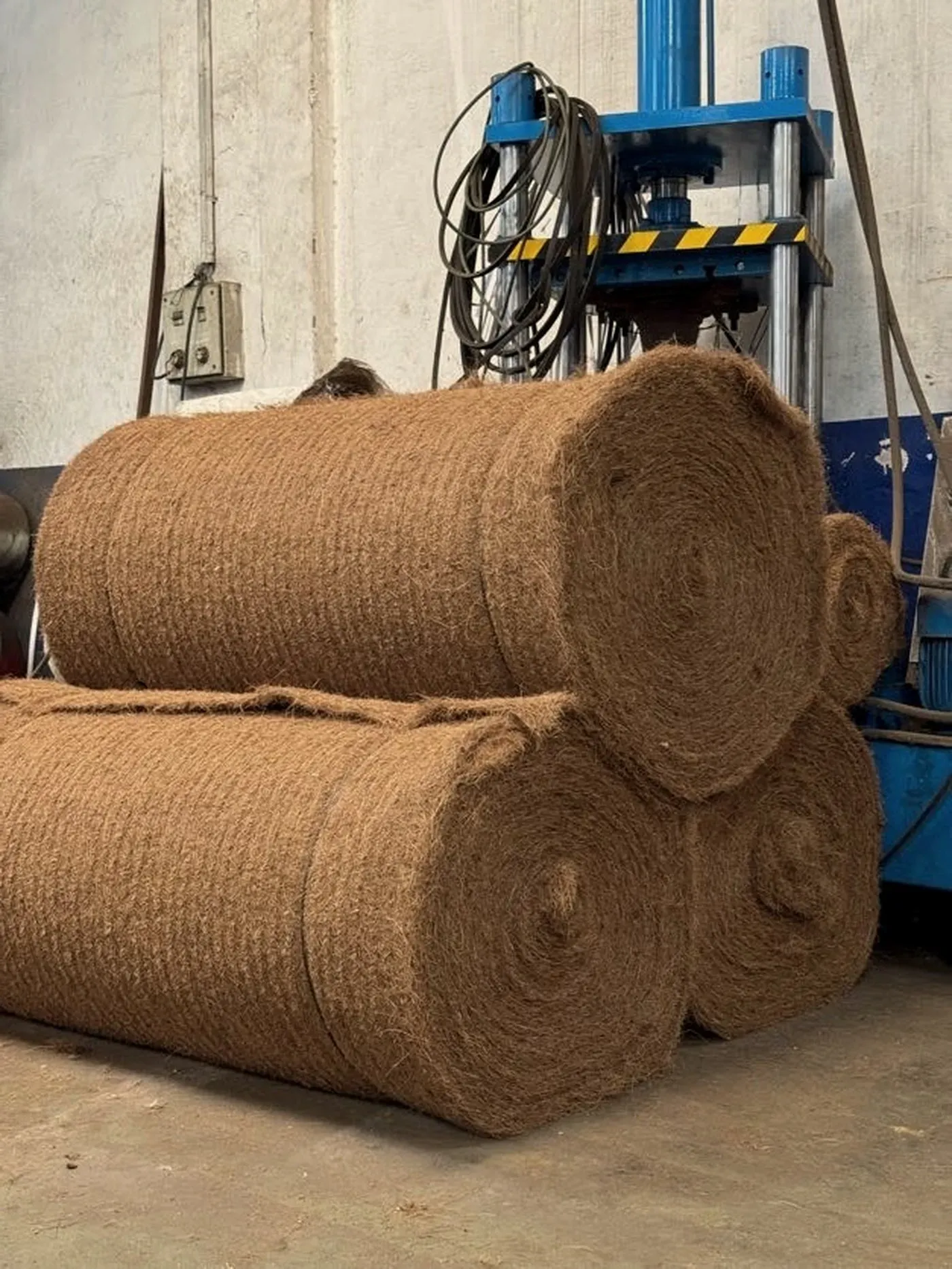
Shot at the Peenya unit. Loose coir going into the feed hopper, and finished material stacked off the press.
By the numbers
The unit
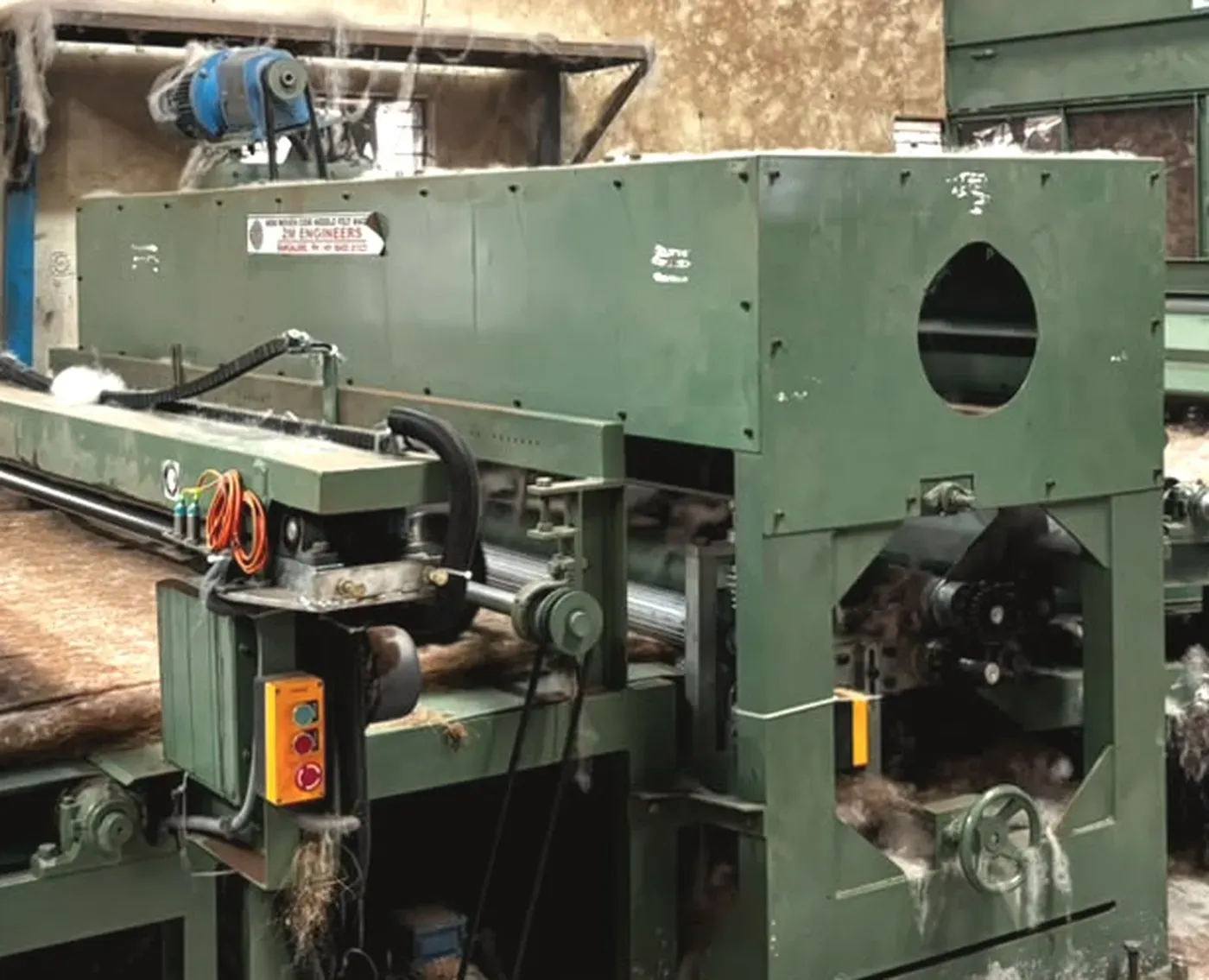
Two mechanical engineers set up the coir machinery workshop in Peenya in 1991. The machines are made there, and the same people answer the phone when one needs a part.
Recognition
In October 2001 the Coir Board presented 2M Engineers with its national award for the development of coir processing machinery, for the years 1999 and 2000, at the ceremony in Kochi.
Questions
Primary fibre
Coconut / coir
Also runs
Banana, sisal and other natural fibres
Six: a non-woven coir needle felt line, a coir fibre extraction machine, a coir sheet fleece cutter, single conveyor and double conveyor 2 ply coir yarn spinning machines, and a fully automatic 3 ply coir rope making machine. All of them are built to order at our works in Peenya, Bengaluru.
Yes. The 2 ply machines spin coir yarn and twine, with the fibre fed by a single or a double conveyor, and the fully automatic 3 ply machine lays heavier coir rope. The raw fibre is cleaned in a willowing machine first, and the spinning machines also run date and sisal fibre.
The machinery is built around coconut fibre, because that is what most of our buyers have close by. Banana, sisal and other natural fibres run on the same line with different settings. If you have a specific local fibre in mind, tell us which and we will confirm suitability directly.
From 5 mm up to 12 mm, at 500 to 1000 GSM, set according to the application. Horticulture and soil work take the thin stock; bedding and sound absorption take the thick. It leaves the line cut into sheets or wound into continuous rolls.
Everything is built at our unit in Peenya, Bengaluru. Machines are made to order, so the people who assemble them are the people who take the call when a line needs a part or a setting changed.
Buyers usually arrive with two things: a fibre they can source and a market they want to sell into. From there it is a question of output per shift, floor space and how much of the line should be automatic. That is why the enquiry form asks what you have rather than which model you want.
Yes. Come to the works in Peenya. If you can carry a sample of the fibre you plan to run, we can put it through a machine and show you the web it makes before you commit to anything.
Since 1991. The first machines were for spinning coir twine; the range has grown to six, covering fibre extraction, cutting, spinning and non-woven needle felt. The Coir Board recognised the work with its national award for coir processing machinery in 2001.
Get in touch
Start with the fibre you can source and the market you want to sell into. We will come back with the machine that suits them, what it produces in a shift and what it costs.