About
Built by the two engineers who started it
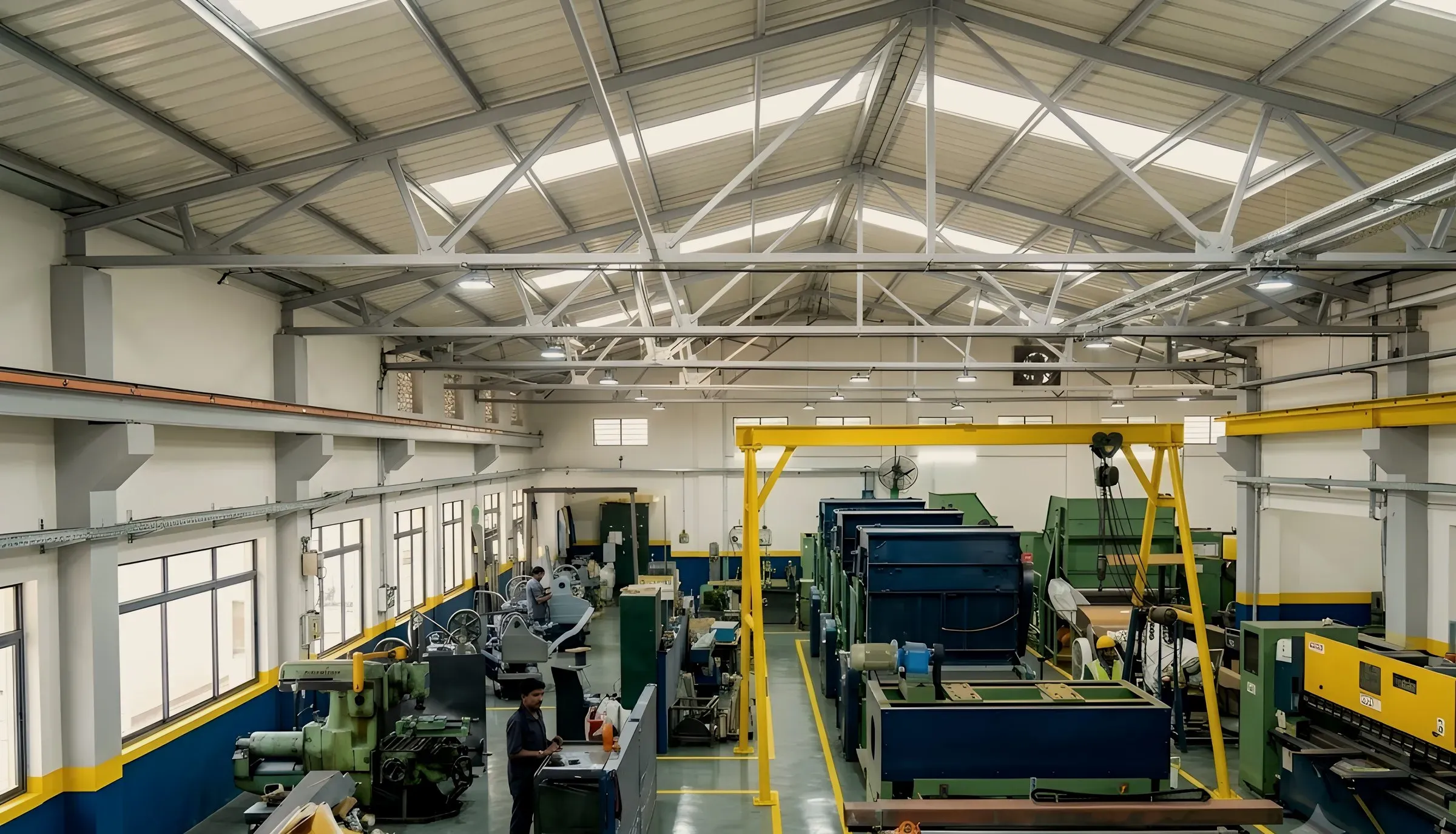
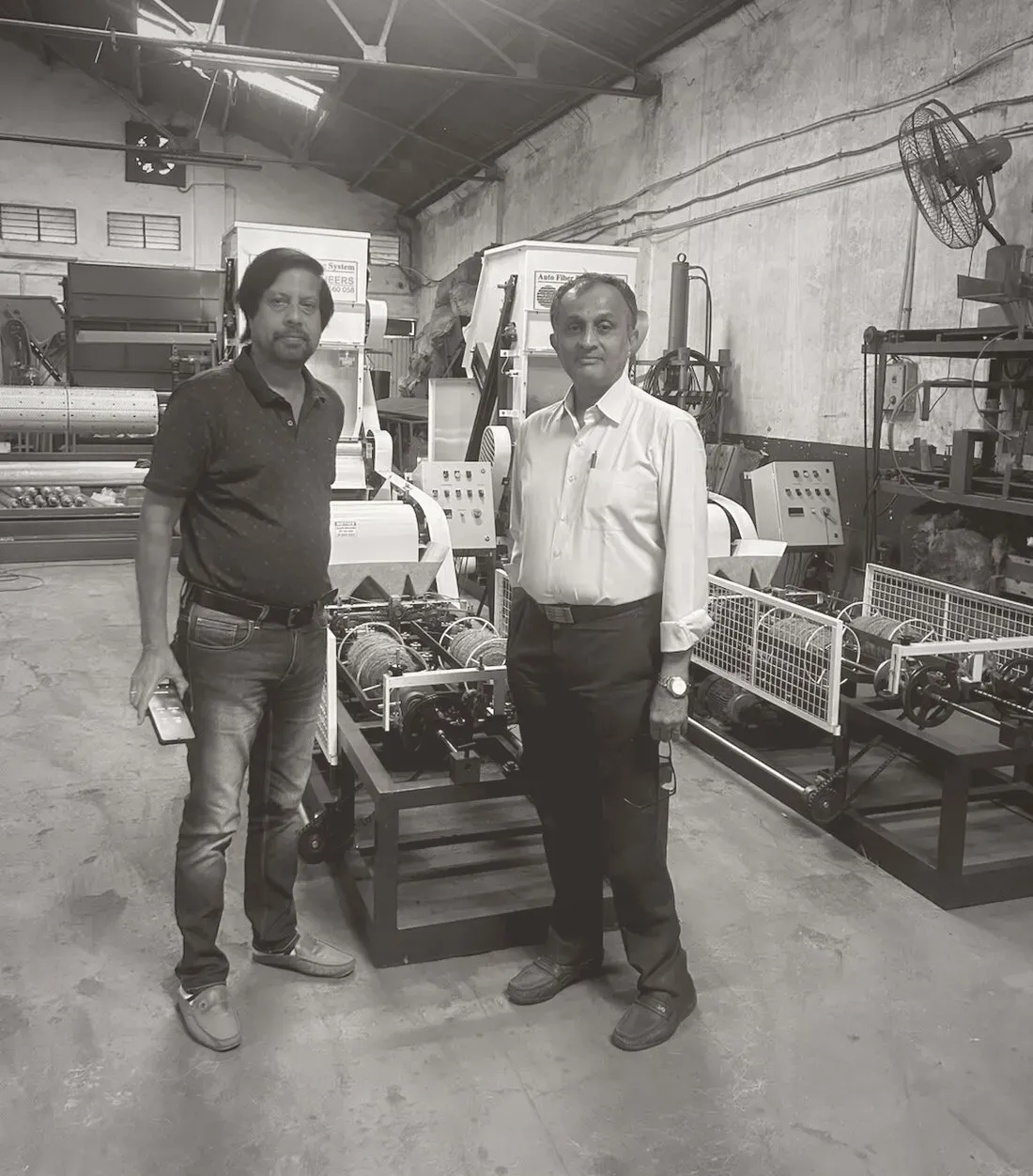
B. Manjunath Shayer and A. S. Madhusudan met at UVCE, set up 2M Engineers in Peenya in 1991, and are still the ones on the floor. Thirty five years on, every coir machine is drawn, fabricated, assembled and test run in the same works.
How the range grew
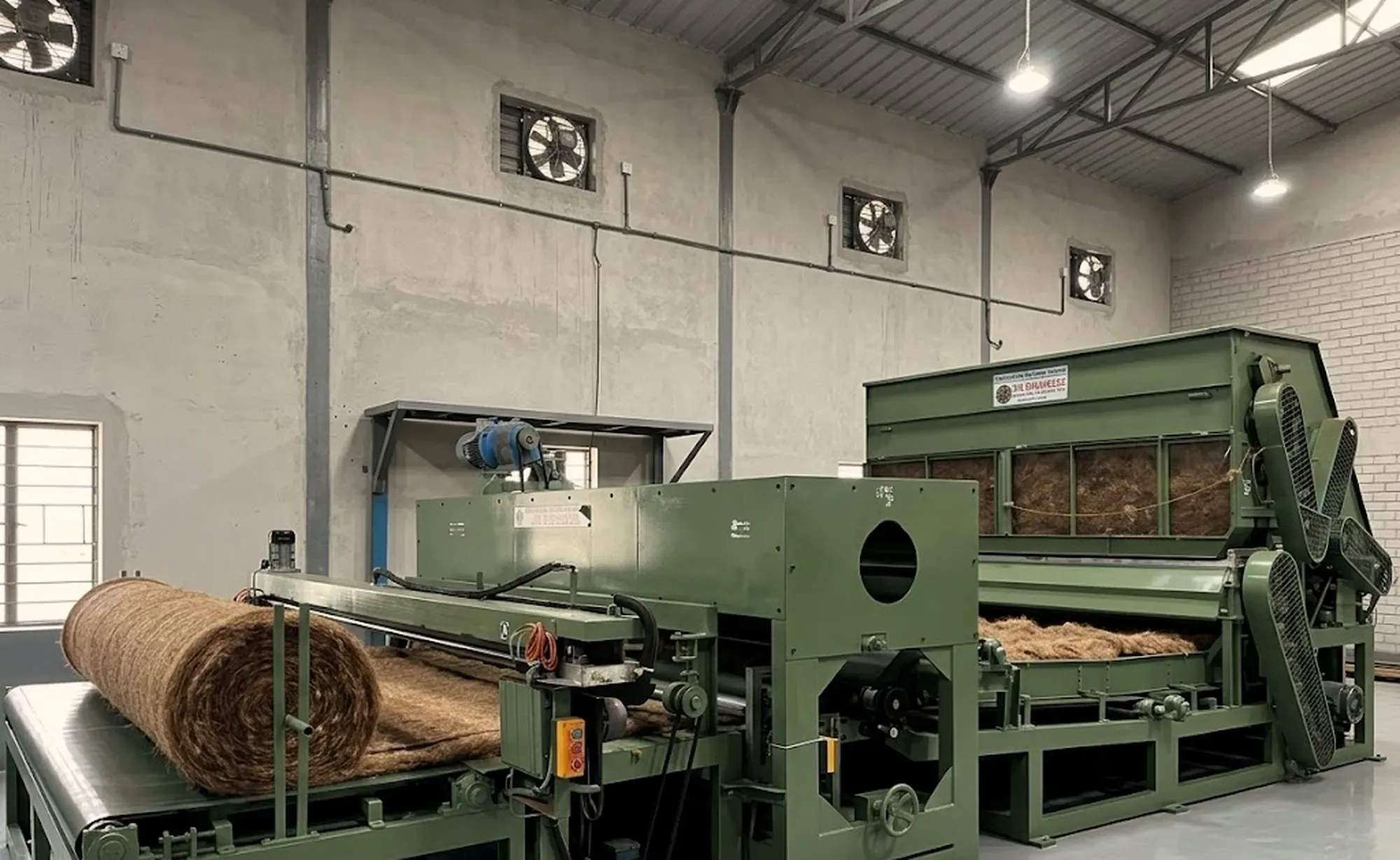
The first machines were for spinning coir twine. Over time the range grew to six, covering fibre extraction, cutting, spinning and non-woven needle felt, and the felt line is the one that changed what a small mill could sell. The same web can be cut for mattress layers, pressed into acoustic panels, rolled for erosion control or moulded into planters.
Why one machine, four products
A machine that makes one product ties up a factory. A machine that makes four keeps it working.
The fibre comes first
Coconut fibre is what most of our buyers have close by, so it is what the machines are set up for first. Banana, sisal and other natural fibres run on the same line with different settings. Where the fibre grows locally and the labour is already there, the material can be made and sold in the same region rather than shipped in.
Everything is built at the unit
Machines are made to order in Peenya, so the people who assemble them are the people who take the call when a line needs a part or a setting changed.
The founders
Two mechanical engineers, still running the floor
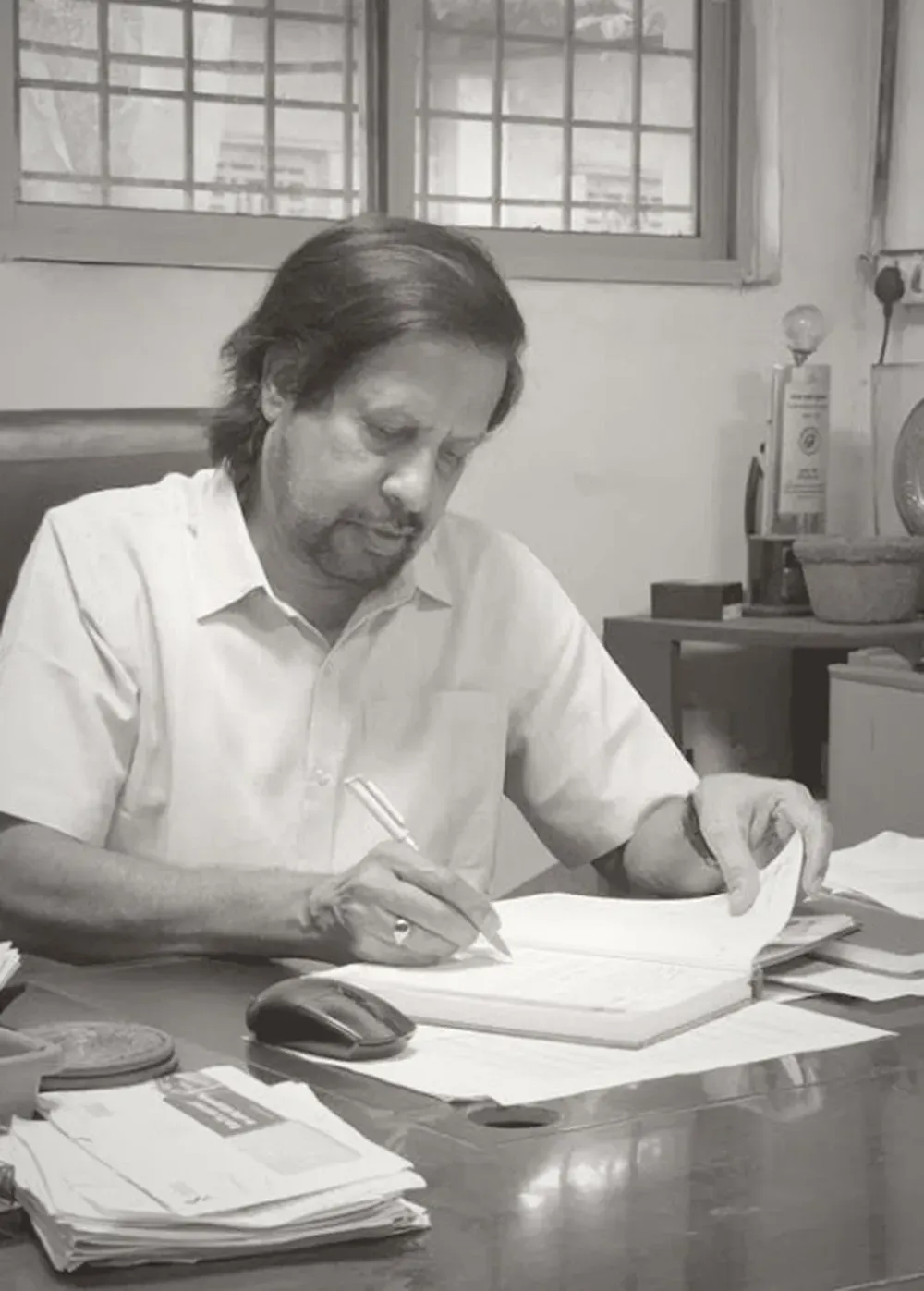
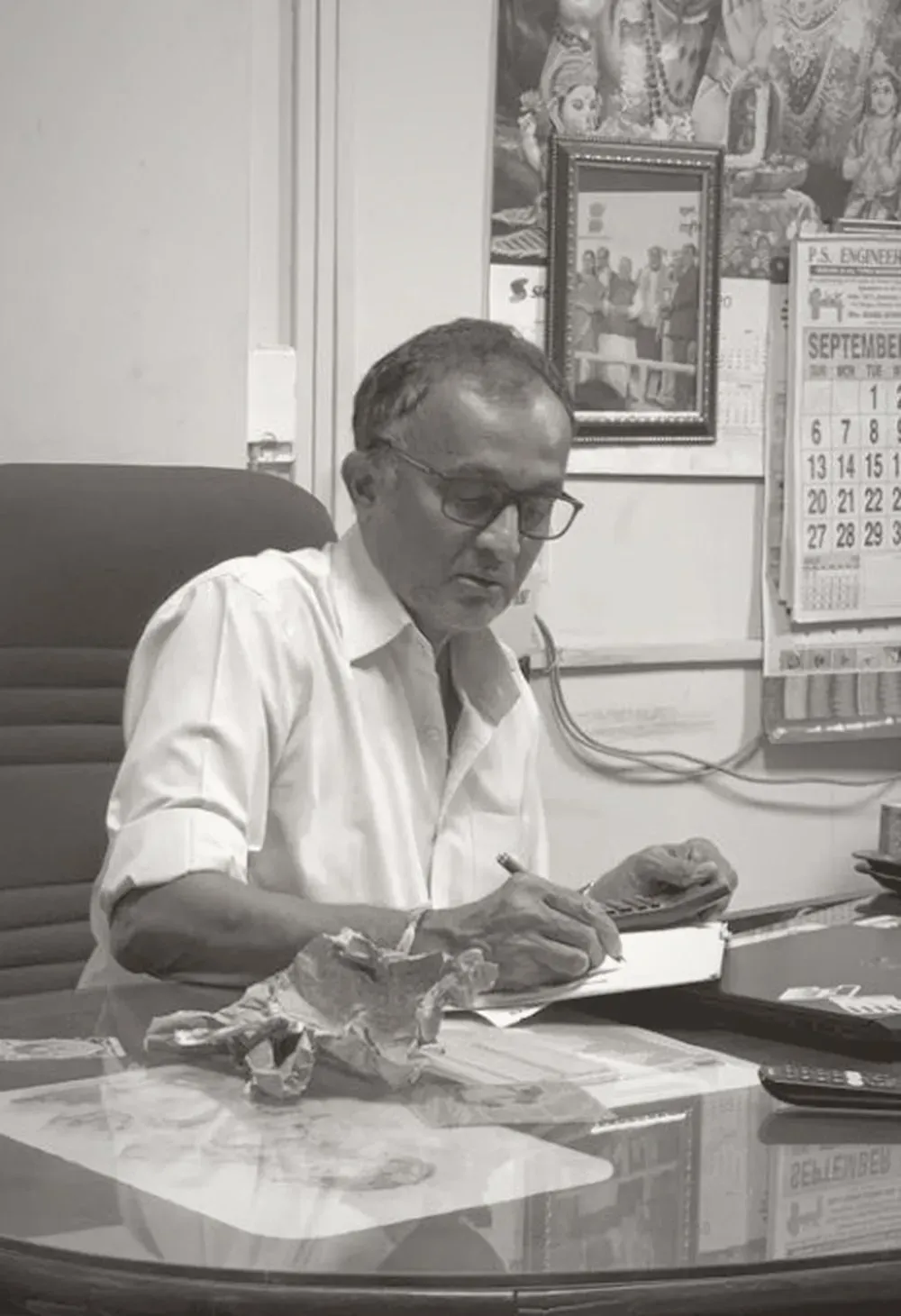
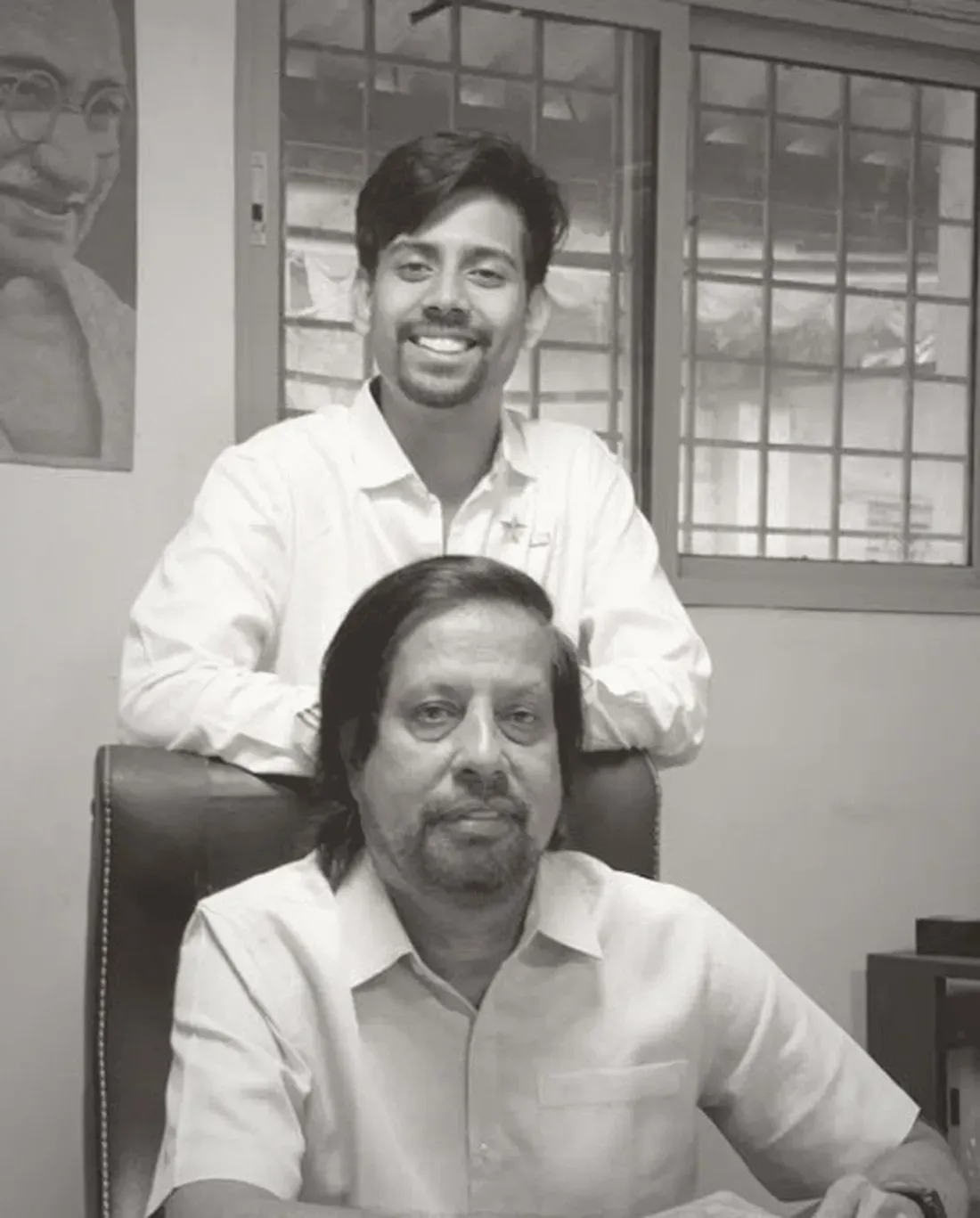
B. Manjunath Shayer and A. S. Madhusudan met at UVCE and set up 2M Engineers in 1991, building electromagnetic clutches, brakes and brake motors for original equipment manufacturers. They moved the firm into coir machinery in 1998 with technical guidance from the engineering division of the Central Institute of Coir Technology, and three years later the Coir Board recognised the work with its national award.
Recognition
Coir Board national award, 2001
In October 2001 the Coir Board presented 2M Engineers with its national award for the development of coir processing machinery, for the years 1999 and 2000, at the ceremony in Kochi.
- Building machinery since
- 1991
- Machines in the range
- 6
- Material thickness, mm
- 5–12
- Coir Board national award
- 2001
Specifying
How a machine gets specified
Buyers usually arrive with two things: a fibre they can source and a market they want to sell into. From there it is a question of output per shift, floor space and how much of the line should be automatic.
Smaller units often start with a mini spinning machine or an extraction machine and add the felt line once the fibre supply is steady. There is no single correct configuration, which is why the enquiry form asks what you have rather than which model you want.
- Non Woven Needle FeltSheet and roll
- Coir Fibre ExtractionFibre
- Coir Sheet Fleece CutterCutting
- Single Conveyor 2 PlySpinning
- Double Conveyor 2 PlySpinning
- Fully Automatic 3 PlyRope